
12:06 JST, September 4, 2022
If King Kong were to visit New York today, he’d hardly recognize the place. The 381-meter Empire State Building, once the tallest building in the world, is now merely the seventh tallest in Manhattan.
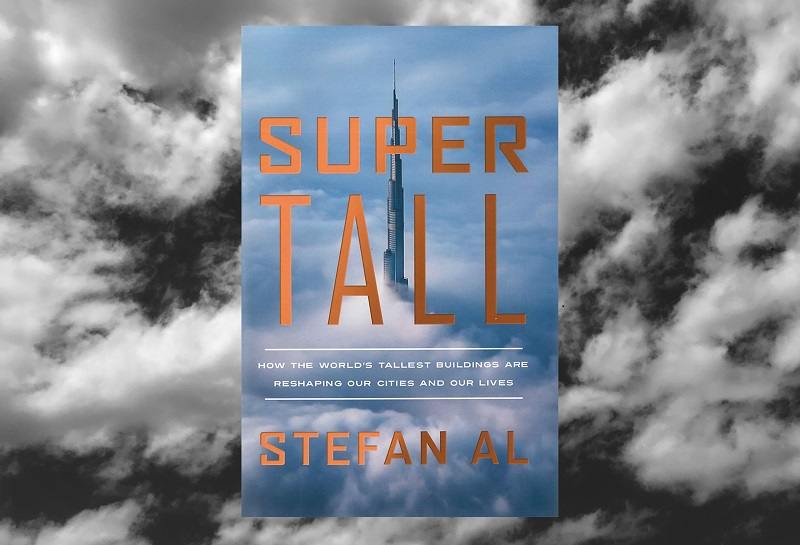
The evolution of the skylines of New York, London, Singapore and other cities is described by architect Stefan Al in his book “Supertall.” The title is a term of art, defined by the Council on Tall Buildings and Urban Habitat as a building over 300 meters in height. Al writes that there were only four such buildings on Earth in 1996, but now the planet bristles with nearly 200 of them.
Abeno Harukas in Osaka, not mentioned in the book, is currently the only Japanese building to reach 300 meters. But Al’s history of how buildings got so tall will have you looking at even less dizzying towers with a more informed eye.
The Empire State Building was constructed around a steel frame, which made it sturdy enough for Kong to climb. But all those steel beams take up a lot of interior space.
Al describes how engineer Fazlur Khan opened up that space with his “tubular frame” design, which put the building’s main support structure on the outside. This can be seen in Chicago’s 100-story John Hancock Center (now officially named 875 North Michigan Avenue), whose crisscrossing beams form gigantic X’s on its facade.
Later, engineer Bill Baker put the support structure back inside, in a compact form called the “buttressed core.”
“Three triangular buttresses supported a hexagonal core like an upright missile supported by its three wings,” Al writes. “This tripartite plan … is more stable, similar to a tripod holding a camera.”
The 830-meter Burj Khalifa in Dubai is a buttressed core building, but it also owes its current world’s-tallest status to a less glamorous technology. Instead of steel, its core is made of reinforced concrete — a surprisingly interesting substance. One chapter of “Supertall” traces the history of concrete from ancient Rome to the present day. Modern concrete is stronger than the Roman kind, but theirs was longer-lasting.
There’s also a chapter on air conditioning, which enabled large buildings to abandon the T- or H-shaped footprints that ensured no one was too far from a window. Another chapter covers elevators, a field in which several Japanese companies have broken one another’s speed records — although Al cautions that elevator speeds are now nearing the limits of bodily comfort.
The latter half of his book focuses on broader issues of city planning, such as mass transit and the human need for urban greenery.
A New York zoning law from 1916 aimed to prevent tall buildings from creating deeply shadowed urban canyons by requiring the outer walls of their higher floors to be set back from the street. This resulted in a tiered “wedding cake” look for many buildings, and is why the Empire State Building’s many ledges afford such ape-friendly handholds.
Recently, some developers have amassed transferable air rights to build “ultra-skinny” buildings in Manhattan. An example is “111 West 57, an 84-story skyscraper [that] is the world’s tallest and most expensive condo building. It has the proportions of a pencil: it’s a whopping twenty-four times taller than it is wide.”
It’s unlikely that Kong would want to climb such a thing, as ultra-skinnies sometimes “sway in the wind like reeds.”
Whether or not a giant primate ever sets foot in a big city again, plenty of ordinary people will. “By 2050, 2.5 billion more urbanites are projected to be living in cities. In addition to new housing, this urban drive will require a massive increase of city infrastructure.”
So, there are many big construction projects ahead. Considering that promoting infrastructure exports was presented as one element of Abenomics, Japan is likely to play a role in those projects. “Supertall” offers some ideas of what they will look like.
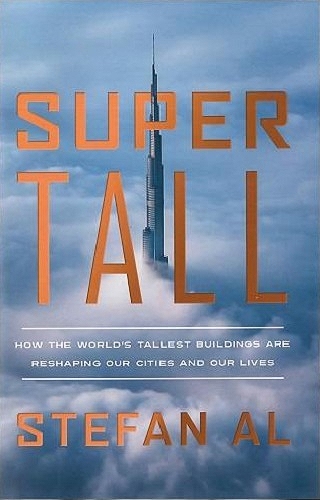
Supertall
- By Stefan Al
- W.W. Norton & Co., 296 pages, $30







Most Read
Most read in the last 24 hours
-

Stepfather Reportedly Admits to Killing 11-Year-Old Boy Who Went ...
-

Trump Urges Extending Foreign Surveillance Program as Some Lawmak...
-

Iran Offers Proposal Allowing Ships to Exit Oman Side of Hormuz F...
-

S&P 500, Nasdaq Push to Closing Records on Optimism around Middle...
-

Pakistani Delegation Meets in Tehran Hoping for More US-Iran Talk...
-
Govt to Tighten Controls over Weapons after Export with New Rules...
-

Japan, US Agree to Intensify Communication on Exchange Rates
-

China's Xi Calls for Strategic Clarity, Political Security with V...
Most read in the last 7 days
-

Police Find Child's Shoe During Search for Missing Boy in Nantan,...
-

Body Found in Nantan, Kyoto Prefecture, During Search for 11-Year...
-

Japanese Prime Minister Takaichi Speaks to Pakistani Prime Minist...
-

Kyoto Police Arrests Father of 11-Year-Old Boy on Suspicion of Ab...
-

Body Found in Kyoto Pref. Forest Confirmed to Be Missing 11-Year-...
-
Strong Typhoon Sinlaku Heading Toward Tokyo's Ogasawara Islands
-

No Clear Plan for Expo Site 6 Months After Close; Delays, Unpaid ...
-
Kyoto Boy Missing for 20 Days; Largescale Search Continues in Nan...
Most read in the last 30 days
-
Mathematician Heisuke Hironaka, Winner of Fields Medal, Dies at 9...
-
Police Find Child's Shoe During Search for Missing Boy in Nantan,...
-
Body Found in Nantan, Kyoto Prefecture, During Search for 11-Year...
-

Cherry Blossoms, Rapeseed Flowers Perform Colorful ‘Duet’ in Niig...
-

New Bird Species Confirmed in Japan for 1st Time in 45 Years, Fou...
-

Nori Prices Surge in Japan Due to Poor Seaweed Production Amid Ri...
-

Earthquake Jolts Kansai Region, Recording Magnitude 4.2, Japanese...
-

Cherry Blossoms in Full Bloom Draw Crowds in Sendai, Miyagi Pref....
Top Articles in Culture
-

Kyoto Native Indigo Dyeing Artisan Wins Top Prize at Traditional Craft Contest for Work Made Using Local Resources
-

Japanese Anime ‘Precure’ Takes on Detective Genre in 23rd Series, Solving Mysterious Cases
-

‘Ichi the Witch’ Manga Writer, Illustrator Talk About Working Together, Creating World of 1st ‘Male Witch’
-

Kabuki Actor Nakamura Takanosuke Looking Forward to Seeing Audiences’ Reactions in Europe in His First Overseas Performances
-
Potter in Japan Concerned That Iran War Is Destroying Persian Culture
JN ACCESS RANKING
-
Police Find Child’s Shoe During Search for Missing Boy in Nantan, Kyoto Prefecture
-
Body Found in Nantan, Kyoto Prefecture, During Search for 11-Year-Old Boy in Area (Update 1)
-
Cherry Blossoms, Rapeseed Flowers Perform Colorful ‘Duet’ in Niigata
-
New Bird Species Confirmed in Japan for 1st Time in 45 Years, Found on Tokara Islands in Kagoshima Pref.
-
Nori Prices Surge in Japan Due to Poor Seaweed Production Amid Rising Sea Temps; Price of Onigiri Rice Balls Also Impacted
Most read in the last 24 hours
-
Stepfather Reportedly Admits to Killing 11-Year-Old Boy Who Went ...
-
Trump Urges Extending Foreign Surveillance Program as Some Lawmak...
-
Iran Offers Proposal Allowing Ships to Exit Oman Side of Hormuz F...
-
S&P 500, Nasdaq Push to Closing Records on Optimism around Middle...
-
Pakistani Delegation Meets in Tehran Hoping for More US-Iran Talk...
Most read in the last 7 days
-
Police Find Child's Shoe During Search for Missing Boy in Nantan,...
-
Body Found in Nantan, Kyoto Prefecture, During Search for 11-Year...
-
Japanese Prime Minister Takaichi Speaks to Pakistani Prime Minist...
-
Kyoto Police Arrests Father of 11-Year-Old Boy on Suspicion of Ab...
-
Body Found in Kyoto Pref. Forest Confirmed to Be Missing 11-Year-...
Most read in the last 30 days
-
Mathematician Heisuke Hironaka, Winner of Fields Medal, Dies at 9...
-
Police Find Child's Shoe During Search for Missing Boy in Nantan,...
-
Body Found in Nantan, Kyoto Prefecture, During Search for 11-Year...
-
Cherry Blossoms, Rapeseed Flowers Perform Colorful ‘Duet’ in Niig...
-
New Bird Species Confirmed in Japan for 1st Time in 45 Years, Fou...