
Oil-Saving Measures Enacted as Iran War Hits 1-Month Mark; Fishers, Farmers Reduce Fuel Use
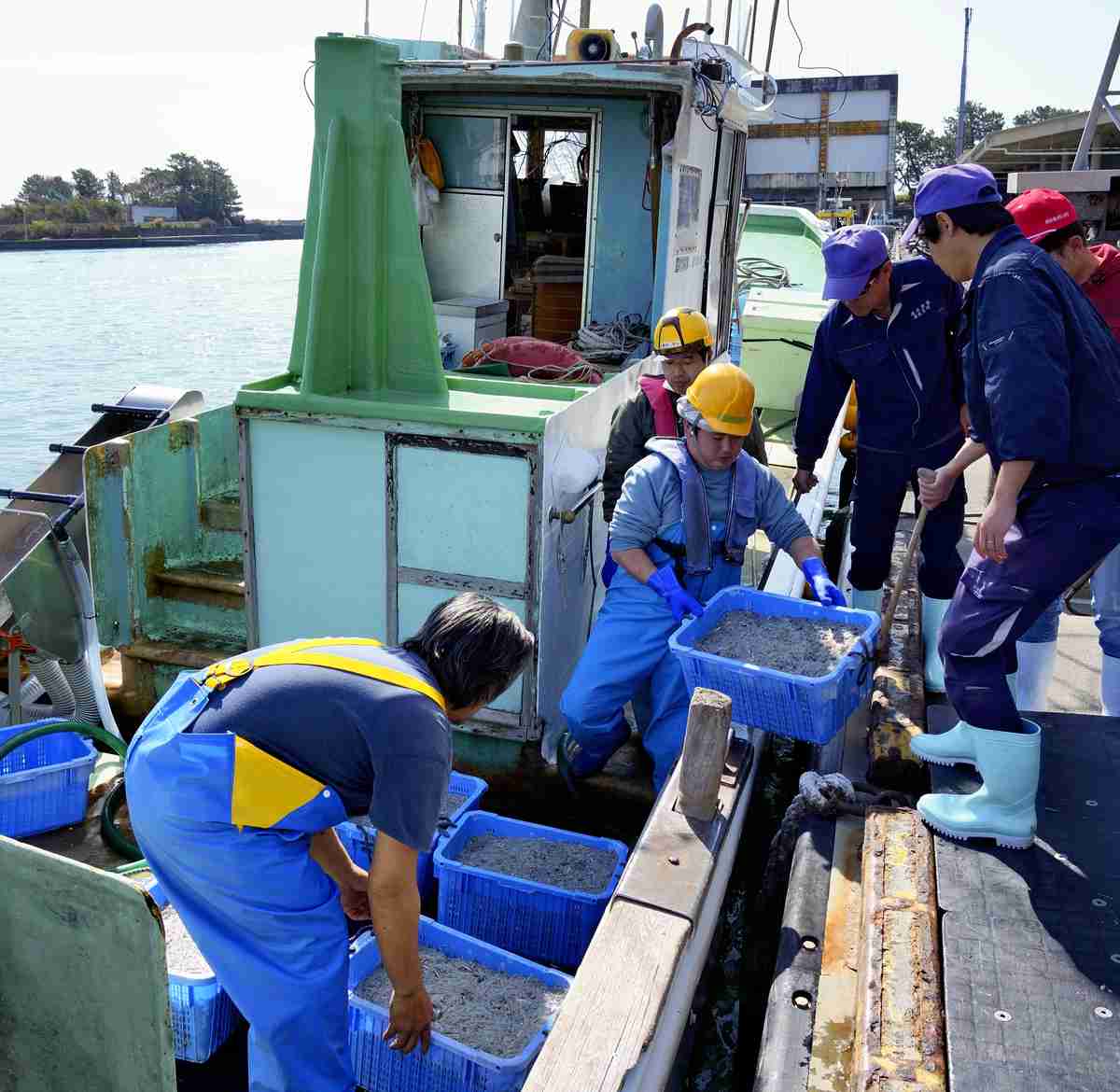
Fishermen unload shirasu from a fishing boat at the Mochimune fishing port in Shizuoka City on Friday.
15:47 JST, March 29, 2026
Saturday marked one month after the United States and Israel launched attacks on Iran. As the effective closure of the Strait of Hormuz drags on and energy supplies become unstable, oil-saving measures have begun to emerge across the country.
The Mochimune fishing port in Shizuoka City boasts one of Japan’s largest catches of shirasu whitebaits. Although the fishing season just opened on March 21, only about 30 fishing boats — roughly half the total fleet at the port — set out on Friday.
The local fisheries cooperative has divided its member vessels into two groups, which go out to sea on alternate days. With it having become difficult to obtain the diesel fuel needed to power the boats, the aim is to avoid depleting fuel reserves early in the season, when shirasu catches are relatively low.
Even when the ships go out, the crew members keep fuel consumption on their mind, maintaining a lower-than-normal speed or even canceling the day’s work when the weather is poor and the haul is likely to be on the light side.
“This is the first time I haven’t been able to go out to sea due to a fuel shortage,” a 62-year-old fisherman said with a sigh.
A 68-year-old farmer who grows early-harvest rice in Tonosho, Chiba Prefecture, decided this month to postpone plowing his rice paddies, a process that improves soil fertility in preparation for the rice growing season.
Plowing his about 80 hectares of rice paddies takes over a month with four or five tractors. Although he had always carried out this process without fail before planting rice seedlings, this time the farmer decided to postpone the process.
“I have no choice but to bite the bullet,” he said.
In response to the global fuel shortage and soaring prices, countries around the world are taking steps to curb energy consumption, such as reducing the number of workdays for civil servants and urging people to limit their use of automobiles.
On March 20, the International Energy Agency (IEA) released a report summarizing oil-saving measures for governments, businesses and households.
Takahide Kiuchi, an executive economist at Nomura Research Institute, Ltd, said, “While Japan still has sufficient oil reserves, if the closure of the Strait of Hormuz drags on, it is possible that measures such as curbing car use and dimming lights will become necessary here as well.”








Most Read
Most read in the last 24 hours
-

Stepfather Reportedly Admits to Killing 11-Year-Old Boy Who Went ...
-

Trump Urges Extending Foreign Surveillance Program as Some Lawmak...
-

Iran Offers Proposal Allowing Ships to Exit Oman Side of Hormuz F...
-

Pakistani Delegation Meets in Tehran Hoping for More US-Iran Talk...
-

S&P 500, Nasdaq Push to Closing Records on Optimism around Middle...
-

Govt to Tighten Controls over Weapons after Export with New Rules...
-

Japan, US Agree to Intensify Communication on Exchange Rates
-

China's Xi Calls for Strategic Clarity, Political Security with V...
Most read in the last 7 days
-
Police Find Child's Shoe During Search for Missing Boy in Nantan,...
-
Body Found in Nantan, Kyoto Prefecture, During Search for 11-Year...
-

Japanese Prime Minister Takaichi Speaks to Pakistani Prime Minist...
-

Kyoto Police Arrests Father of 11-Year-Old Boy on Suspicion of Ab...
-

Body Found in Kyoto Pref. Forest Confirmed to Be Missing 11-Year-...
-
Strong Typhoon Sinlaku Heading Toward Tokyo's Ogasawara Islands
-

No Clear Plan for Expo Site 6 Months After Close; Delays, Unpaid ...
-
Kyoto Boy Missing for 20 Days; Largescale Search Continues in Nan...
Most read in the last 30 days
-

Mathematician Heisuke Hironaka, Winner of Fields Medal, Dies at 9...
-
Police Find Child's Shoe During Search for Missing Boy in Nantan,...
-
Body Found in Nantan, Kyoto Prefecture, During Search for 11-Year...
-

Cherry Blossoms, Rapeseed Flowers Perform Colorful ‘Duet’ in Niig...
-
New Bird Species Confirmed in Japan for 1st Time in 45 Years, Fou...
-

Nori Prices Surge in Japan Due to Poor Seaweed Production Amid Ri...
-

Earthquake Jolts Kansai Region, Recording Magnitude 4.2, Japanese...
-

Cherry Blossoms in Full Bloom Draw Crowds in Sendai, Miyagi Pref....
Top Articles in Society
-
Police Find Child’s Shoe During Search for Missing Boy in Nantan, Kyoto Prefecture
-
Body Found in Nantan, Kyoto Prefecture, During Search for 11-Year-Old Boy in Area (Update 1)
-
Cherry Blossoms, Rapeseed Flowers Perform Colorful ‘Duet’ in Niigata
-
New Bird Species Confirmed in Japan for 1st Time in 45 Years, Found on Tokara Islands in Kagoshima Pref.
-
Earthquake Jolts Kansai Region, Recording Magnitude 4.2, Japanese Seismic Intensity Scale 3
JN ACCESS RANKING
-
Police Find Child’s Shoe During Search for Missing Boy in Nantan, Kyoto Prefecture
-
Body Found in Nantan, Kyoto Prefecture, During Search for 11-Year-Old Boy in Area (Update 1)
-
Cherry Blossoms, Rapeseed Flowers Perform Colorful ‘Duet’ in Niigata
-
New Bird Species Confirmed in Japan for 1st Time in 45 Years, Found on Tokara Islands in Kagoshima Pref.
-
Nori Prices Surge in Japan Due to Poor Seaweed Production Amid Rising Sea Temps; Price of Onigiri Rice Balls Also Impacted
Most read in the last 24 hours
-
Stepfather Reportedly Admits to Killing 11-Year-Old Boy Who Went ...
-
Trump Urges Extending Foreign Surveillance Program as Some Lawmak...
-
Iran Offers Proposal Allowing Ships to Exit Oman Side of Hormuz F...
-
Pakistani Delegation Meets in Tehran Hoping for More US-Iran Talk...
-
S&P 500, Nasdaq Push to Closing Records on Optimism around Middle...
Most read in the last 7 days
-
Police Find Child's Shoe During Search for Missing Boy in Nantan,...
-
Body Found in Nantan, Kyoto Prefecture, During Search for 11-Year...
-
Japanese Prime Minister Takaichi Speaks to Pakistani Prime Minist...
-
Kyoto Police Arrests Father of 11-Year-Old Boy on Suspicion of Ab...
-
Body Found in Kyoto Pref. Forest Confirmed to Be Missing 11-Year-...
Most read in the last 30 days
-
Mathematician Heisuke Hironaka, Winner of Fields Medal, Dies at 9...
-
Police Find Child's Shoe During Search for Missing Boy in Nantan,...
-
Body Found in Nantan, Kyoto Prefecture, During Search for 11-Year...
-
Cherry Blossoms, Rapeseed Flowers Perform Colorful ‘Duet’ in Niig...
-
New Bird Species Confirmed in Japan for 1st Time in 45 Years, Fou...