
Heirs to Kyoto Talent: Maki-e Artisan Uses Brilliant Skill to Preserve Traditional Lacquerware Craft
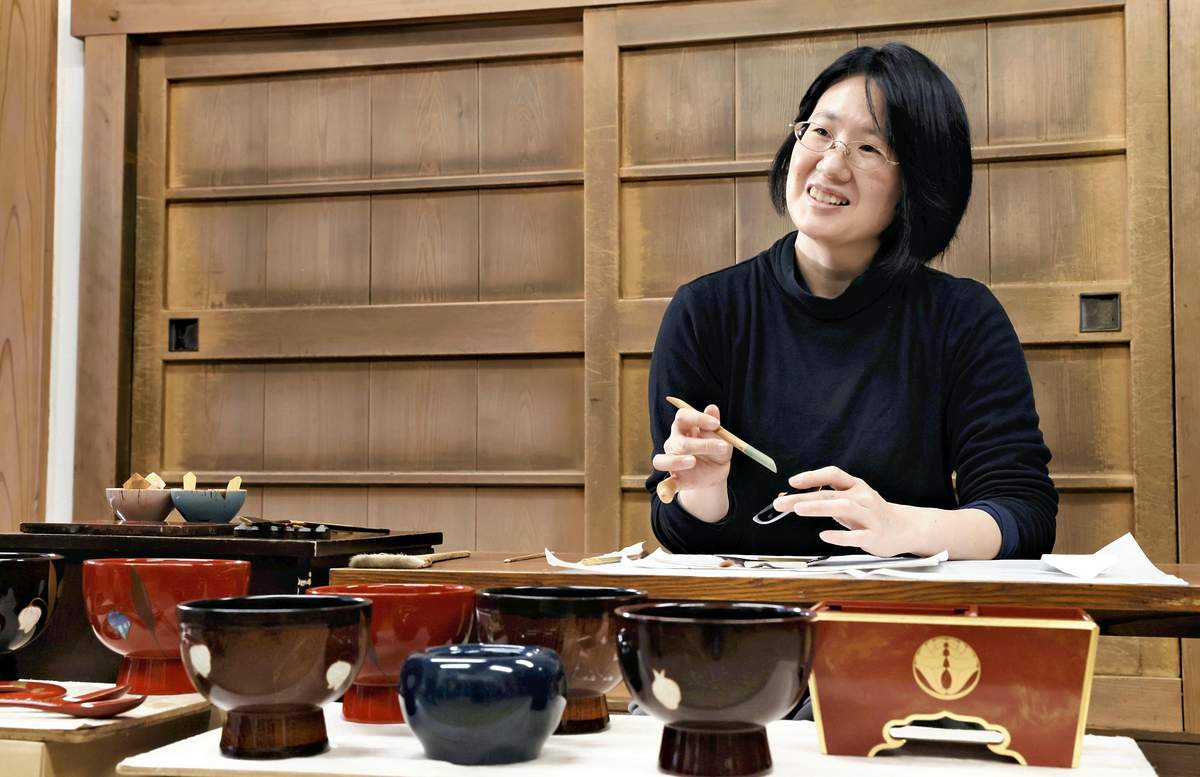
Maki-e artisan Kana Kondo speaks while holding a special cylinder used to sprinkle powder, in Shimogyo Ward, Kyoto.

14:04 JST, February 8, 2025
KYOTO — “Shikkoku,” which uses the character for “lacquer” and means “jet black,” is the perfect word to describe the deep and lustrous surface of lacquerware. Maki-e is a technique in which gold powder and other materials are sprinkled on this lacquered surface to create patterns and designs as if manipulating light and dark in an infinite universe. This superb technique is praised in the West as “japan” after its country of origin. For more than 1,000 years, the art has been cultivated in Kyoto to decorate Buddhist and Shinto ritual tools, tea ceremony utensils, furniture and other items for daily life.
Kana Kondo is a maki-e artisan at the Shimode Maki-e Studio in Shimogyo Ward, Kyoto, which was founded in 1912. Nearly 20 years ago, while studying history and museology at a local university, she was inspired by a variety of precious items and cultural assets to enter a career that preserves valuable objects.
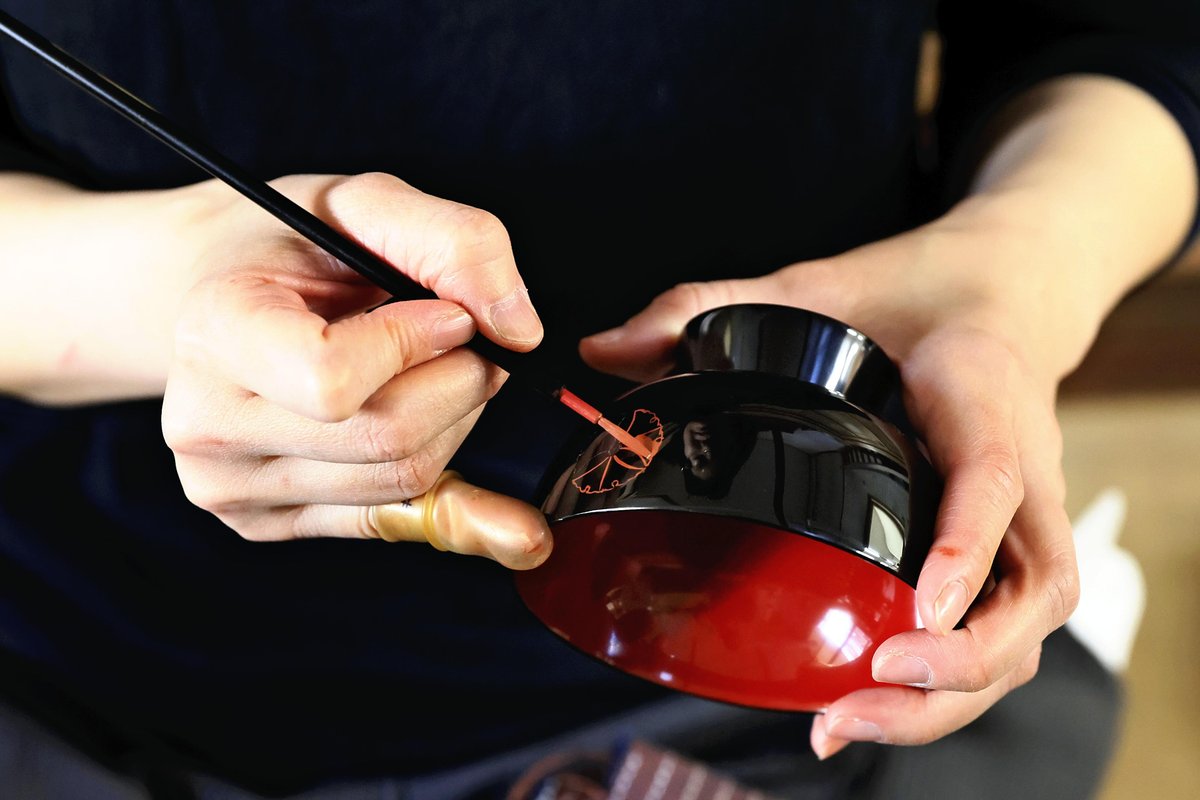
Kondo precisely applies lacquer to a bowl.
The viscosity, hardening time and texture of lacquer change depending on the temperature and humidity, as well as the season and location where it was collected.
The application of countless layers, from the base to the finishing touches, is a finicky process. All artisans know that if the thickness of each layer is not correct even by the slightest amount, the result will be disastrous.
Path to genuine interests
Gold powder is essential for creating various maki-e designs, such as standard patterns and light motifs. Gold powder can be used in more than 80 combinations of various shapes and sizes, such as round and flat. In addition, platinum, silver, copper and a technique called raden (mother-of-pearl inlay) are used to bring out the most appealing expression of light.
A variety of unique materials and tools are used, such as brushes made from rat armpit hair and cat hair, various kinds of charcoal, which smooth the surfaces, and sea bream tooth for polishing.
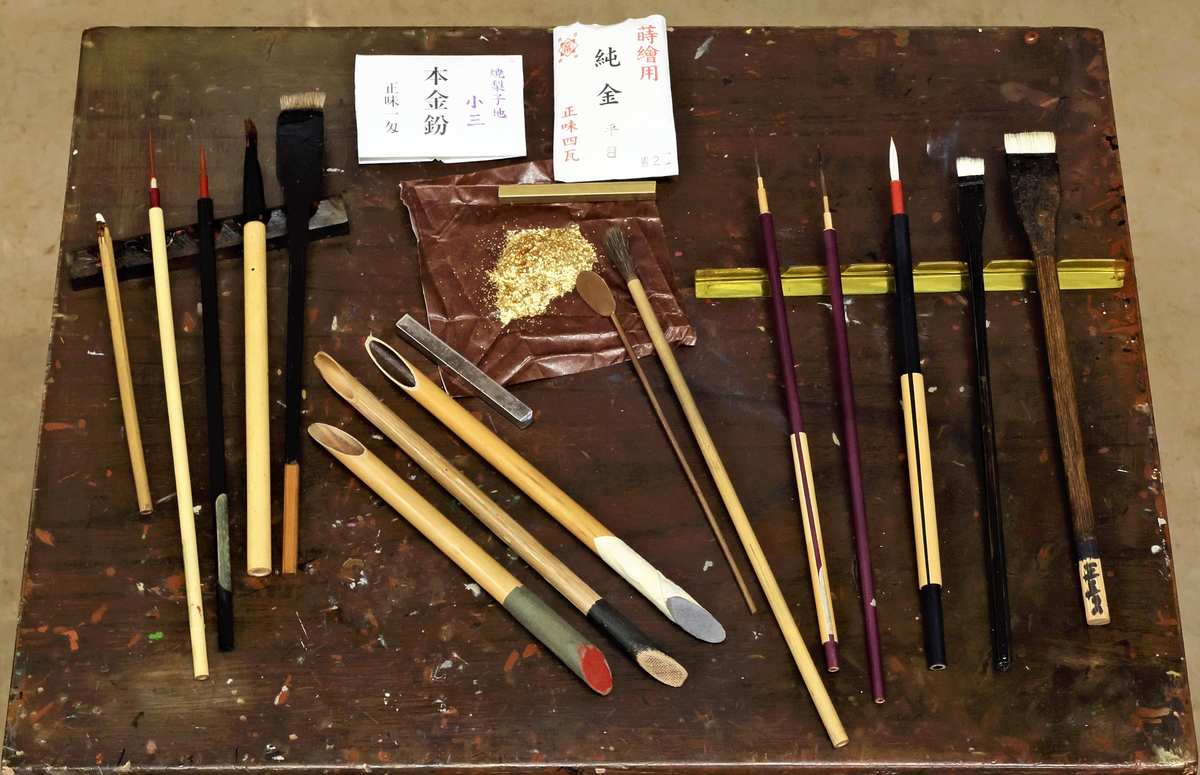
A range of maki-e tools, including powder cylinders and brushes made of unusual materials
Powder is sprinkled with a special cylinder made of a piece of reed from Lake Biwa that has a cloth attached to its cross section. During the process, the surface is polished repeatedly. When sprinkling the powder, the cylinder held is above the surface and continuously tapped gently with one’s middle finger. The tapping sound and the movement of the brushes to apply the lacquer evenly create a solid rhythm.
Kondo often moved while growing up, and her family enjoyed visiting various temples, shrines and art museums together. However, when she saw restoration and research work at university, she was intimidated by other students acquiring advanced knowledge and skills.
When it came time to start job hunting, Kondo tried to highlight her strengths during job interviews but couldn’t imagine what it would be like to work for a company. She then asked herself, “What kind of work is true to myself and is something that I can continue for a long time?”
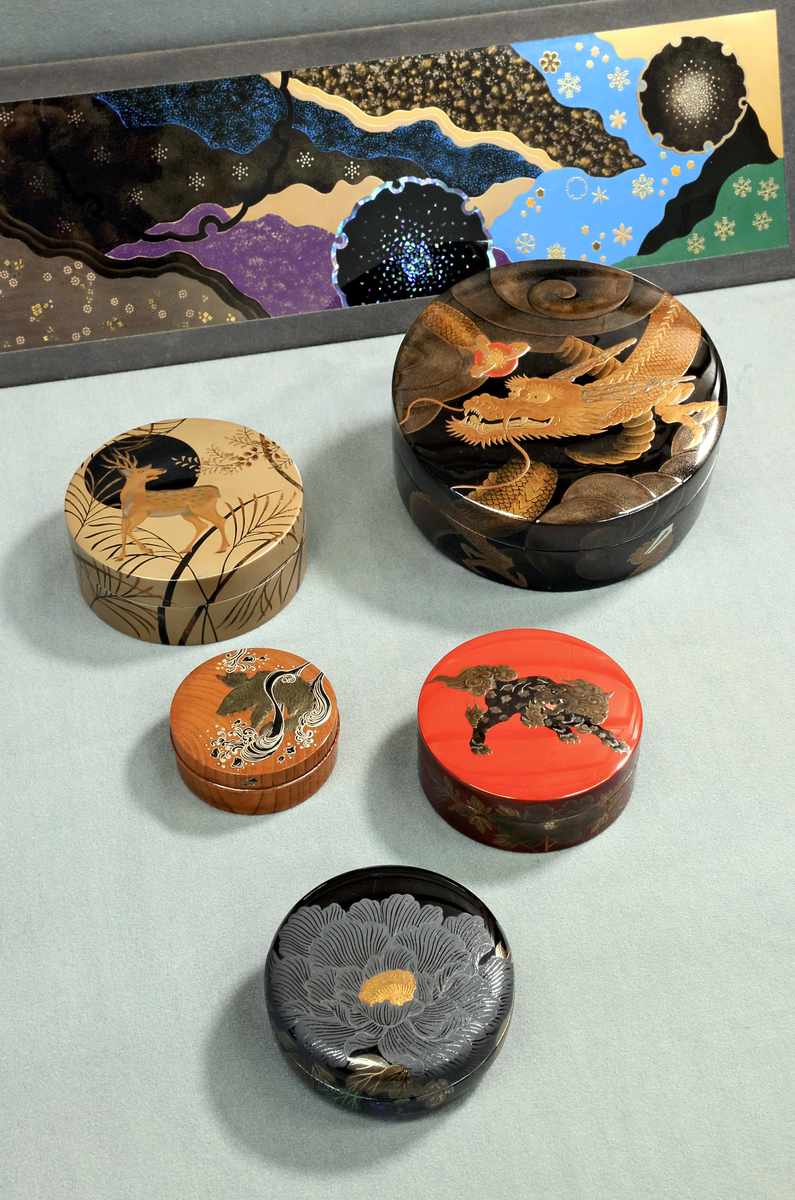
Pieces by Kondo that have been entered in competitions. The delicate designs draw in the eye.
Although Kondo was not sure of her future, she decided to pursue her genuine interests. She entered what is now Traditional Arts Super College of Kyoto in Nantan, Kyoto Prefecture, where she was taught by working professionals.
Bright future
In this completely new world, Kondo chose to learn maki-e as she felt that “it makes the most of materials and forms, and the creator’s individuality always comes through, even though it involves a wide range of techniques.”
Yutaro Shimode, the third-generation head of his family workshop and Kondo’s teacher and mentor, noticed her patient approach to maki-e when she was learning the basics. He has made both traditional and modern works, as well as earned a doctorate from his scientific research of maki-e.
Shimode recognized Kondo’s knowledge and her commitment to perfecting each technique and invited her to work on making furniture of the highest quality for the Kyoto State Guest House. Kondo accepted, as she thought that she could learn both classical and modern elements.
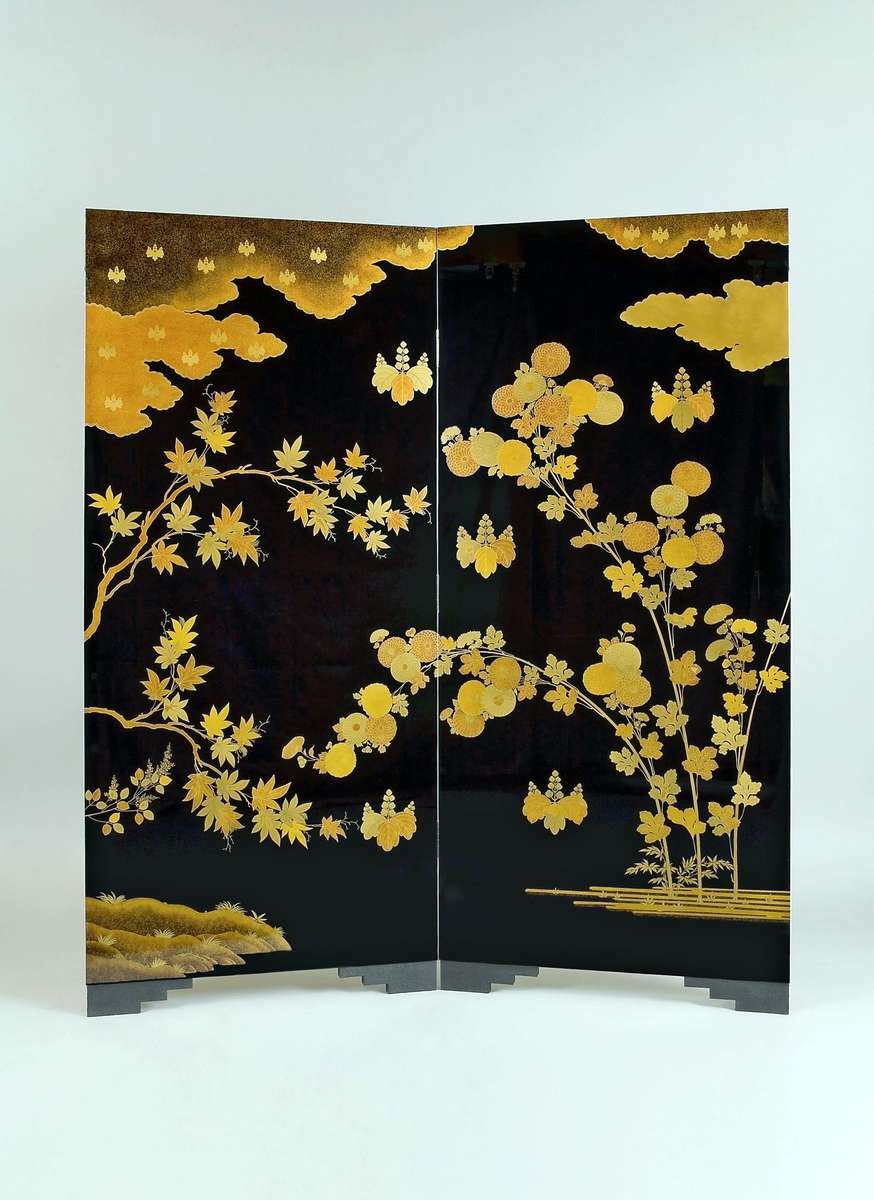
A folding screen created based on a pattern on the back of a door at the miniature shrine at Kodaiji temple in Kyoto
Later, Kondo joined Shimode’s workshop and has mastered the various maki-e techniques required in the workshop, including the preservation of pieces made between the late Edo period (1603-1867) and the Meiji era (1868-1912), when maki-e was at its height, as well repairing designated cultural properties.
Maki-e has been replaced by mass-produced plastic products and is becoming an art form and a rare item. Still, Kondo said, “The charm of maki-e lies not in looking at it but in the beauty of holding it in your hands.”
A flute case used by a friend who is a musician for Kyoto’s Gion Festival. A wooden fan carried by a referee at the grand sumo tournament. When Kondo envisions how these maki-e items will continue to be used and passed on to future generations, she feels her passion overflow. Certainly, she will keep refining maki-e and brighten its future.
***
If you are interested in the original Japanese version of this story, click here.





Related Tags






Most Read
Most read in the last 24 hours
-

Kyoto Police Arrests Father of 11-Year-Old Boy on Suspicion of Ab...
-

Stepfather Reportedly Admits to Killing 11-Year-Old Boy Who Went ...
-

Trump Urges Extending Foreign Surveillance Program as Some Lawmak...
-

Govt to Tighten Controls over Weapons after Export with New Rules...
-

Iran Offers Proposal Allowing Ships to Exit Oman Side of Hormuz F...
-

Father of 11-Year-Old Kyoto Boy Implies Abandoning Boy's Body dur...
-

Pakistani Delegation Meets in Tehran Hoping for More US-Iran Talk...
-

S&P 500, Nasdaq Push to Closing Records on Optimism around Middle...
Most read in the last 7 days
-
Police Find Child's Shoe During Search for Missing Boy in Nantan,...
-

Body Found in Nantan, Kyoto Prefecture, During Search for 11-Year...
-

Japanese Prime Minister Takaichi Speaks to Pakistani Prime Minist...
-

Body Found in Kyoto Pref. Forest Confirmed to Be Missing 11-Year-...
-
Kyoto Police Arrests Father of 11-Year-Old Boy on Suspicion of Ab...
-
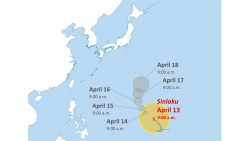
Strong Typhoon Sinlaku Heading Toward Tokyo's Ogasawara Islands
-

No Clear Plan for Expo Site 6 Months After Close; Delays, Unpaid ...
-
Kyoto Boy Missing for 20 Days; Largescale Search Continues in Nan...
Most read in the last 30 days
-
Mathematician Heisuke Hironaka, Winner of Fields Medal, Dies at 9...
-
Police Find Child's Shoe During Search for Missing Boy in Nantan,...
-
Body Found in Nantan, Kyoto Prefecture, During Search for 11-Year...
-

Cherry Blossoms, Rapeseed Flowers Perform Colorful ‘Duet’ in Niig...
-

New Bird Species Confirmed in Japan for 1st Time in 45 Years, Fou...
-
Nori Prices Surge in Japan Due to Poor Seaweed Production Amid Ri...
-

Earthquake Jolts Kansai Region, Recording Magnitude 4.2, Japanese...
-

Cherry Blossoms in Full Bloom Draw Crowds in Sendai, Miyagi Pref....
Top Articles in Features
-
Cherry Blossoms in Full Bloom Draw Crowds in Sendai, Miyagi Pref.; Aquarium Creates Underwater ‘Cherry Blossom Viewing’ Show
-

Cherry Blossom Viewing Season at Peak in Japan’s Kanazawa
-
Cherry Blossoms, Tulips, Snow-Capped Peaks Create Picturesque Scene in Toyama Pref., Japan
-
Cherry Blossom Viewers Enjoy Picnic Under the Trees in Full Bloom in Famous Osaka Spot
-

Cherry Blossom View in Front of Shinkansen Bullet Trains Attracting Visitors in Nagasaki Pref.
JN ACCESS RANKING
-
Police Find Child’s Shoe During Search for Missing Boy in Nantan, Kyoto Prefecture
-
Body Found in Nantan, Kyoto Prefecture, During Search for 11-Year-Old Boy in Area (Update 1)
-
Cherry Blossoms, Rapeseed Flowers Perform Colorful ‘Duet’ in Niigata
-
New Bird Species Confirmed in Japan for 1st Time in 45 Years, Found on Tokara Islands in Kagoshima Pref.
-
Nori Prices Surge in Japan Due to Poor Seaweed Production Amid Rising Sea Temps; Price of Onigiri Rice Balls Also Impacted
Most read in the last 24 hours
-
Kyoto Police Arrests Father of 11-Year-Old Boy on Suspicion of Ab...
-
Stepfather Reportedly Admits to Killing 11-Year-Old Boy Who Went ...
-
Trump Urges Extending Foreign Surveillance Program as Some Lawmak...
-
Govt to Tighten Controls over Weapons after Export with New Rules...
-
Iran Offers Proposal Allowing Ships to Exit Oman Side of Hormuz F...
Most read in the last 7 days
-
Police Find Child's Shoe During Search for Missing Boy in Nantan,...
-
Body Found in Nantan, Kyoto Prefecture, During Search for 11-Year...
-
Japanese Prime Minister Takaichi Speaks to Pakistani Prime Minist...
-
Body Found in Kyoto Pref. Forest Confirmed to Be Missing 11-Year-...
-
Kyoto Police Arrests Father of 11-Year-Old Boy on Suspicion of Ab...
Most read in the last 30 days
-
Mathematician Heisuke Hironaka, Winner of Fields Medal, Dies at 9...
-
Police Find Child's Shoe During Search for Missing Boy in Nantan,...
-
Body Found in Nantan, Kyoto Prefecture, During Search for 11-Year...
-
Cherry Blossoms, Rapeseed Flowers Perform Colorful ‘Duet’ in Niig...
-
New Bird Species Confirmed in Japan for 1st Time in 45 Years, Fou...